Fiberglass or Concrete? Choosing a Pool for Your Orlando Yard
Both fiberglass and concrete pools work well in an Orlando backyard. A concrete (gunite) pool is shaped by hand on site, so it can follow almost any design. A fiberglass pool arrives as a finished shell and typically goes in within 2-4 weeks once the yard is ready.
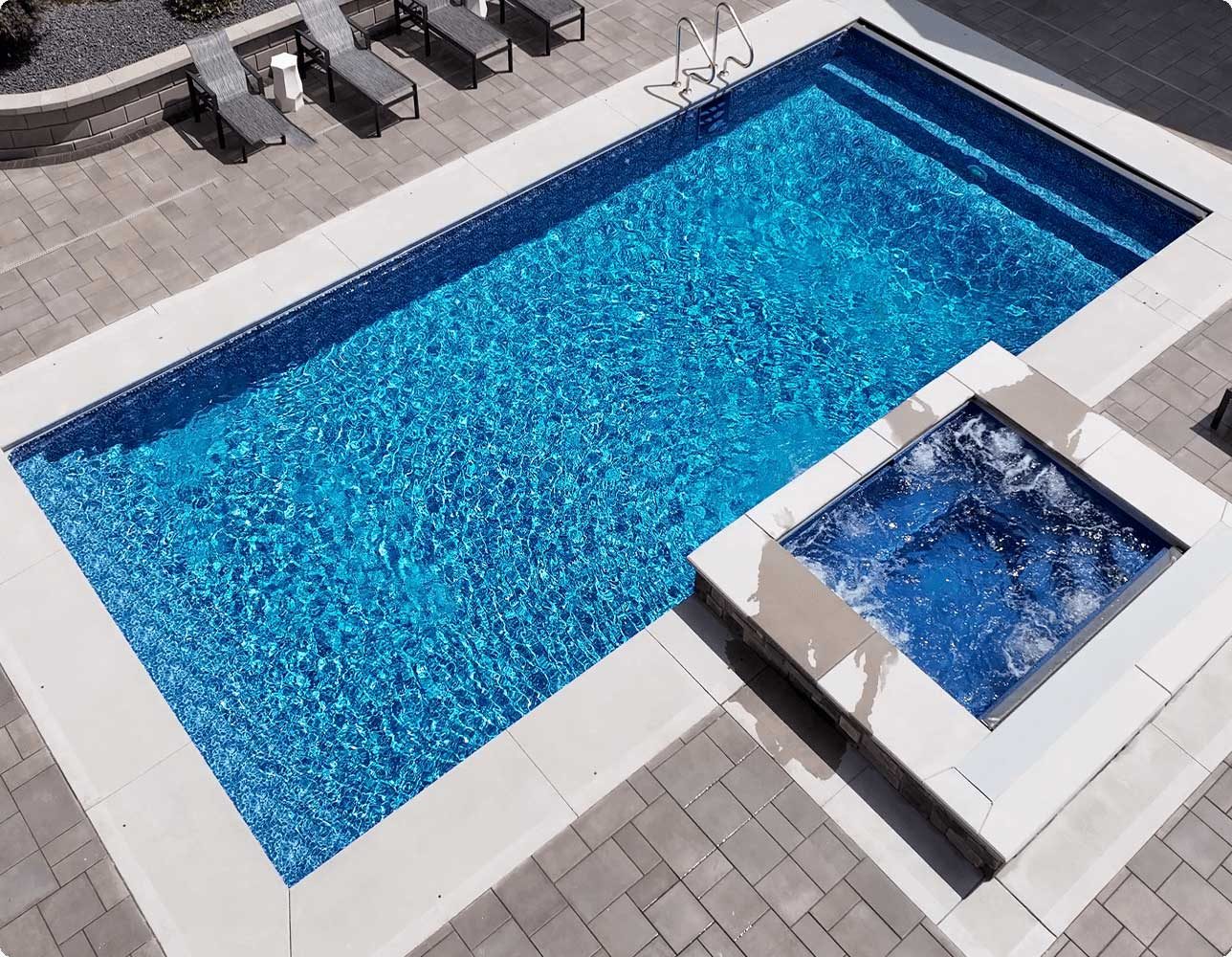
Fiberglass and concrete are two of the most common ways to build an inground pool. Each one is a good choice for the right yard and the right family. If you are weighing a fiberglass vs concrete pool in Orlando, it helps to know how each one is built and what that means for design, upkeep and timing. Hallmark Pool & Spa World builds both, so this guide covers them side by side.
The Main Difference Between Fiberglass and Concrete Pools
The difference comes down to where the pool is made.
A concrete pool is built in your yard. Hallmark builds its concrete pools with gunite. Gunite is concrete that is sprayed into place with air pressure over a grid of steel reinforcing bar, then shaped by hand.
A fiberglass pool is made in a factory. The whole shell, including its finished surface, is formed in one piece. It is delivered to your home and set into a hole dug to fit it.
That one difference shapes most of the other points below.
How a Concrete (Gunite) Pool Is Built
Hallmark builds custom gunite pools in four phases:
- Layout and excavation. The crew marks the outline, digs, sets the steel (rebar on 12-inch centers) and puts in the first plumbing.
- The pool shell. The gunite is sprayed and hand-shaped. Then the crew backfills, pregrades and runs the rough plumbing, which is pressure tested for leaks.
- Tile, coping and deck. Waterline tile goes on, footers go in if the pool will be screened, then the coping (the cap along the pool's top edge) and the deck.
- Systems, finish and startup. Electrical work, the screen enclosure and safety features, the plaster interior and startup chemistry, then final grading and cleanup.
Because the shell is formed on site, a concrete pool can be almost any shape or size the yard allows. The design starts as a 3D model, so you can see it and change it before construction begins. You can read more on the custom pools page.
How a Fiberglass Pool Is Installed
A fiberglass pool skips the on-site shell work. Once the hole is dug and the site is prepared, the finished shell is lowered into place in one piece. The plumbing, deck and equipment are then completed around it.
Once the yard is ready, a fiberglass pool typically goes in within 2-4 weeks. That is one of the main reasons people choose fiberglass.
Hallmark is an authorized dealer for Latham, which calls itself the largest inground pool manufacturer. Hallmark can offer all 70 Latham fiberglass pool shapes, across 17 collections. The fiberglass pools page has more detail.
Design Choices and Shapes
Both types give you plenty of choices. They give them in different ways.
With a concrete pool, the design is drawn from scratch for your yard. Shapes can be geometric (straight lines and clean corners), freeform (curved, natural edges) or infinity-edge, where water spills over one edge. The interior can be finished in quartz, pebble or tile. Features such as waterfalls, bubblers, deck jets, LED lighting, tanning ledges, spas and swim-up bars can be built into the design.
With a fiberglass pool, you choose from the manufacturer's range of shapes and sizes. Latham's 70 shapes cover a wide spread of styles. Latham also makes in-ground spas that can be paired with its fiberglass pools, and some of those spas have a spillover, where spa water flows into the pool.
In short, concrete starts from a blank page, and fiberglass starts from a large catalog.
Surface, Upkeep and Warranty
The surface you touch is different for each type.
A fiberglass pool has a smooth, non-porous surface. Non-porous means it has no tiny pores for algae to settle into, so the surface resists algae. Latham's shells use a patented ceramic core and Crystite finishes, and they carry a lifetime structural warranty from Latham.
A concrete pool's surface depends on the finish you choose. Quartz, pebble and tile each have their own texture and color. Over the life of any concrete pool, the interior surface is eventually refinished. Many owners use that as a chance to update the look with a new finish or tile.
Every pool needs regular care, whatever it is made of. That means balanced water, clean filters and a working pump. Hallmark does not offer weekly cleaning or chemical service, but it can recommend local providers.
Fiberglass vs Concrete Pool in Orlando: How to Choose
A few points can help you decide.
- A one-of-a-kind shape or a specific size. Concrete can be built to fit almost any design.
- A shorter install time. A fiberglass pool typically goes in within 2-4 weeks once the yard is ready.
- A shape that already fits. If one of the Latham shapes suits your yard and your plans, fiberglass is worth a close look.
- The features that matter most. List them first, then see which type handles them best in your space.
Orlando's climate suits either type. The swimming season is long, so many families use their pool most of the year. Many homeowners add a screen enclosure to help keep leaves and bugs out of the water. Both pool types can be screened.
Cost depends on size, design, materials and features for both types, so the best way to compare is a quote for your own yard. Whichever way you lean, Hallmark can walk you through both options for your yard. Call (407) 847-4622 or request a free pool quote to get started.
Frequently Asked Questions
Is a fiberglass pool or a concrete pool better?
Neither one is better for everyone. Concrete can be built to almost any shape, and fiberglass arrives finished and typically goes in within 2-4 weeks once the yard is ready.
How long does it take to install a fiberglass pool?
Once the yard is ready, a fiberglass pool typically goes in within 2-4 weeks. The shell arrives finished and is set in one piece.
Is a gunite pool the same as a concrete pool?
Yes. A gunite pool is a concrete pool. Gunite is concrete that is sprayed into place with air pressure and then shaped by hand.
Which costs more, fiberglass or concrete?
It depends on size, design, materials and features. Hallmark builds both and gives free, no-obligation quotes, so you can compare them for your own yard.
Get a Free Quote
Tell us about your yard and what you have in mind, and we'll put together a free, no-obligation quote.